


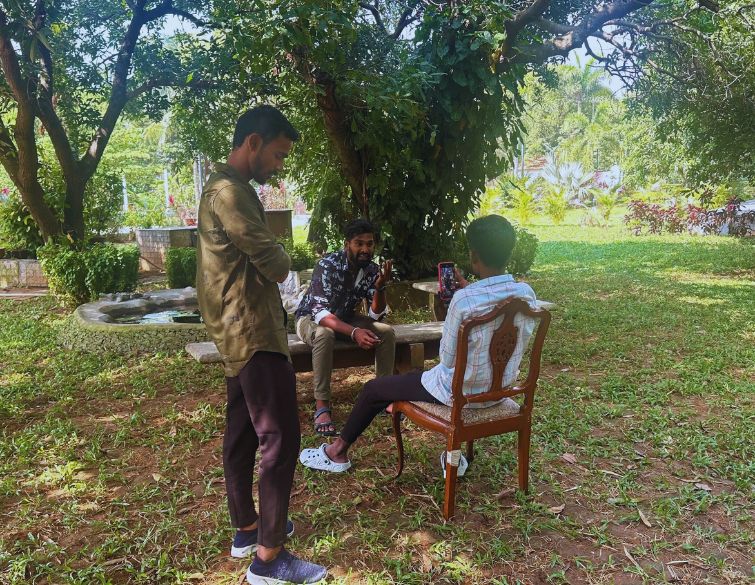
Earlier this year, a group of electronics sector workers in Tamil Nadu attended a digital content creation workshop — some using social media for the first time. “I didn’t even know what Instagram was. Now I do,” recalls Bhanu M from Sriperumbudur. Seeing others create reels and posts encouraged her to try as well.
By the end of the session, several participants had made short, humorous videos and shared them on Cividep’s Tamil Instagram page — a space for workers to connect, learn, and express themselves. This initiative is part of Cividep’s broader efforts to engage workers in ways that resonate with them. The Annual Report 2024 (link) captures a year of outreach, leadership development, policy engagement, and research, highlighting both new and ongoing initiatives.
As India continues its growth as a global manufacturing hub, the challenges facing workers remain prominent. The Report highlights how Cividep’s work in 2024 focused on spotlighting the gap between economic growth and workers’ realities — ensuring they have the tools, knowledge, and networks to seek fair working conditions.

Expanding Worker Engagement
Cividep’s engagement with workers now includes digital tools, the arts, and cross-sector collaborations. The Ilam Thozhargal Sangamam event brought together over 750 young electronics sector workers, creating space for talent showcases, solidarity, and community-building. The Home and the World of Work report and the documentary Garment Kelsa: Women and Work brought attention to how gender, caste, and economic inequities shape women’s experiences in garment supply chains.
Long-standing efforts to empower women workers continued. Through the Amplifying Worker Voice project, supported by the Azim Premji Foundation, the team collaborated with four grassroots organisations in Bengaluru to help women garment workers seek better working conditions. Cividep’s Worker Resource Centres (WRCs) trained 16 worker leaders, many of whom are now active in groups like Munnade Social Organisation and Sadhana, advocating for gender equality, worker rights, and health.
Health and Well-being
Worker health remained central to Cividep’s work in 2024. The SWELL Project on the Employee State Insurance Scheme (ESIS) examined barriers preventing women garment workers from accessing benefits. Stakeholder meetings in Bengaluru revealed low awareness and bureaucratic hurdles, with further discussions planned in Tamil Nadu to push for gender-sensitive healthcare reforms.
Meanwhile, the Multi-Actor Partnership (MAP) Project on Gender and Health continued efforts to promote gender-responsive Occupational Safety and Health (OSH) guidelines. In collaboration with German partners, the team is engaging with brands and industry stakeholders to raise awareness and adopt safer, more equitable workplaces.
Driving Worker-Centric Knowledge Building
Cividep’s research in 2024 provided key evidence for policy and reform efforts. Under the STITCH Project, a survey of 600 garment workers across Bengaluru, Tiruppur, and Delhi-NCR identified human rights risks in the sector, shaping a Human Rights Due Diligence (HRDD) methodology applicable across industries. Additionally, research on grievance mechanisms in India’s leather supply chain led to recommendations for better worker protections.
Cividep also contributed to global discussions on worker rights. Director Rekha Chakravarthi and Programme Lead Pradeepan Ravi co-authored Global Monopsony, Contracting Practices and Labour, published in the Indian Journal of Labour Economics, exploring the impact of monopsony capitalism.
Strengthening Networks
Cividep’s efforts in 2024 focused on strengthening ties with national and international stakeholders. Engagement with garment sector collectives gained momentum, amplifying garment worker voices in policy discussions. The team’s research, especially on Human Rights Due Diligence (HRDD), provided insights that could be shared at an OECD Forum side session on stakeholder engagement and at The Industry We Want’s deep dive session on purchasing practices. These efforts helped connect worker realities to policy and action, notes the Report.
Marking 25 Years
As Cividep approaches its 25th anniversary, the focus remains on creating workplaces that uphold dignity, safety, and fairness. As Executive Director Deepika Rao says: “One of our key takeaways from the past year is that we were able to complete many of the initiatives we set out to do. That momentum is something we will build upon. In 2025, we are expanding our efforts by integrating digital tools into worker engagement, strengthening collaborative networks, and developing knowledge products that inform policy and action.”
Read Annual Report: https://cividep.org/wp-content/uploads/2025/03/Cividep-Annual-Report-2024.pdf